
Rooted in Resilience: Stellenbosch Scientists Unveil Drought-Proof Vines
Stellenbosch University researchers unveil new drought-resistant vine varieties, offering a critical lifeline to the Cape Winelands' iconic wine industry amidst
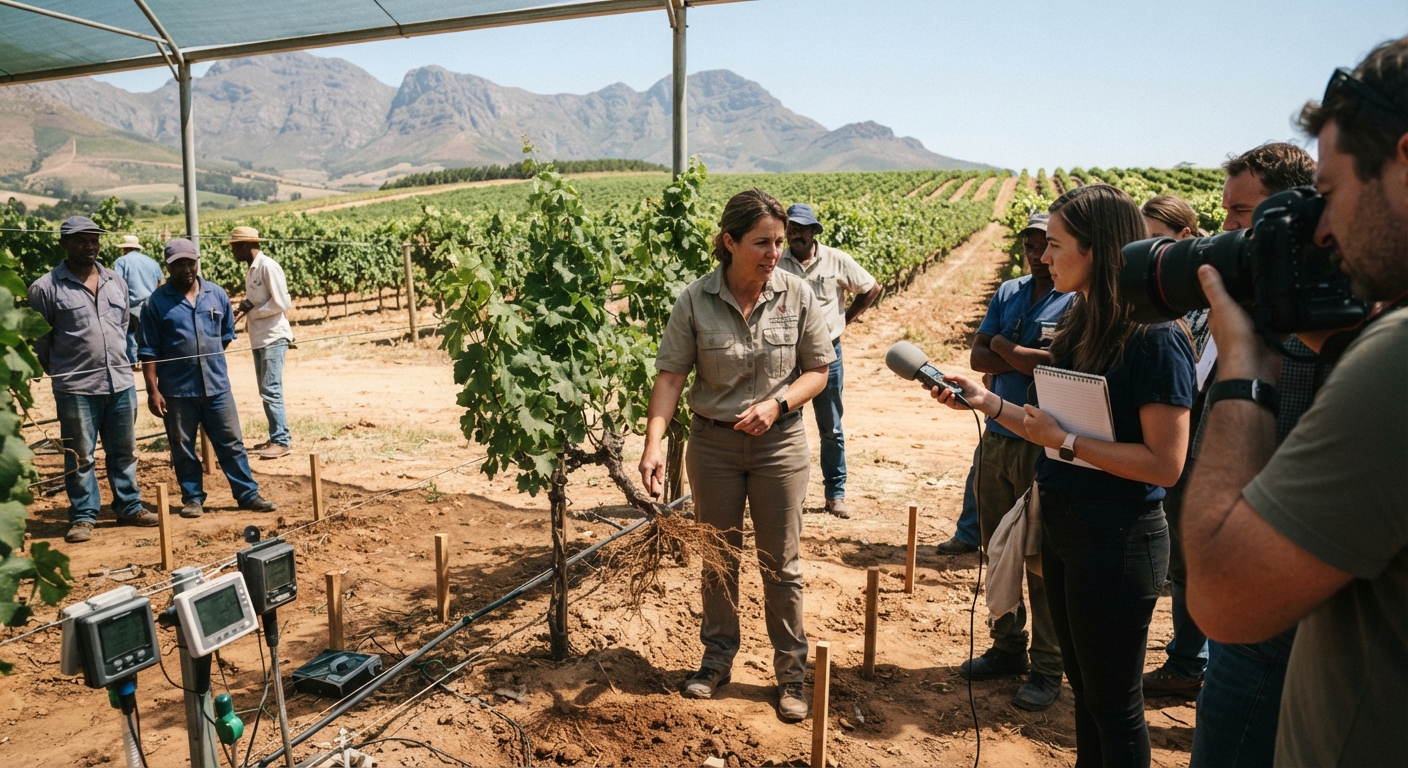
A groundbreaking development from Stellenbosch University promises to fundamentally reshape the future of the Cape Winelands. Researchers at the institution's Department of Viticulture and Oenology have successfully developed new drought-resistant vine varieties, offering a vital lifeline to a region increasingly grappling with unpredictable weather patterns and water scarcity. This innovation could safeguard not just the iconic vineyards, but the very economic and cultural fabric of the Winelands.
A Vine for Tomorrow
For years, Winelands farmers have contended with the looming threat of prolonged dry spells, pushing water resources to their limits and challenging traditional farming practices. The team at Stellenbosch, led by Professor Elna van der Merwe, has engineered grapevines that can thrive on significantly less water, maintaining fruit quality and yield even under stressful conditions. "Our goal was not just survival, but sustained excellence," explains Prof. van der Merwe. "These new varieties leverage intrinsic genetic traits, allowing them to efficiently manage water uptake and withstand dehydration without compromising the distinctive characteristics that make our wines globally renowned." The research involved meticulous cross-breeding and selection, rather than genetic modification, ensuring broad acceptance within the industry.Economic & Environmental Ripples
The implications of this breakthrough are far-reaching. For the wine industry, it means enhanced resilience against climate change, potentially reducing irrigation costs and securing harvests in unpredictable seasons. This stability is crucial for both small-scale producers and large estates, fostering greater sustainability across the board. Environmentally, the reduced demand for water will alleviate pressure on already strained municipal and agricultural water supplies, benefiting the wider community. Furthermore, the commercial availability of these vines, anticipated within the next five to seven years pending further field trials and regulatory approvals, could position the Cape Winelands as a global leader in sustainable viticulture. This innovation also opens doors for new research and development, solidifying Stellenbosch University's reputation as a hub of agricultural innovation.The Local Angle
This research is not merely an academic triumph; it's a profound investment in the longevity and prosperity of the Cape Winelands. For residents, it means greater water security, as less water is diverted to agriculture during droughts. For students, particularly those in agricultural sciences, it highlights cutting-edge local research and potential career paths in sustainable viticulture and oenology. Wine-industry professionals will find these new varieties essential tools for future-proofing their vineyards, ensuring continued production and market competitiveness. And for investors, this innovation signals a stable, forward-thinking industry, mitigating climate risks and enhancing the long-term value of regional wine assets. It’s a testament to the region’s commitment to innovation and sustainability.Conclusion
The development of drought-resistant vines by Stellenbosch University marks a pivotal moment for the Cape Winelands. It underscores the region’s proactive approach to environmental challenges and offers a tangible path towards a more sustainable and secure future for its most cherished industry. This breakthrough ensures that the Winelands will continue to flourish, producing world-class wines for generations to come, even in the face of a changing climate.Source: Sun Agri
#Climate Change#Viticulture#Stellenbosch University#Water Scarcity#Wine Industry#Agricultural Innovation
More from Winelands Review
local_news9 Nov 2026
Stellies' Last-Gasp Heroics Electrify Winelands, Clinching CKO Semifinal Berth
via Google News: Stellenbosch news
2mRead →
local_news8 Nov 2026
Stellenbosch FC Ignites Winelands Hope in Carling Knockout Semis Showdown
via Google News: Stellenbosch news
3mRead →
local_news8 Nov 2026
Stellenbosch Icon Celebrates Centuries of Global Wine Acclaim
via Google News: Stellenbosch news
3mRead →